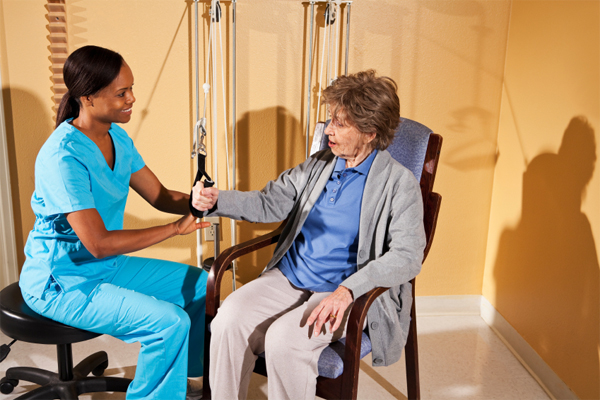
Occupational therapy is a health profession that focuses on helping
individuals with mental or physical illness/disabilities to achieve the
highest level of functioning and wellness possible in their daily lives.
In other words occupational therapy is skilled treatment that helps individuals
with disabilities, achieve independence in all facets of their lives.
This includes performance of all daily normal activities in work, play,
leisure etc.
Occupational therapists (OT's) work with those who have physically,
mentally, developmentally, or emotionally disabling conditions. They help
patients identify imbalances they may have in their lives and design activities
to deal with them. This type of therapy is patient specific, involving
recreational, creative or educational activities. The patient's specific
interests, his background, his previous experiences also form an integral
part of treatment.
OT's area of work includes giving customized treatment programs for specific
disabilities, evaluating home and work environments and giving recommendations
for necessary adaptation, recommending adaptive equipment for permanent/temporary
loss of function, such as wheel chairs, splints, aids for eating and dressing
needed for the patient and training them in its use, assessing and recording
the patients progress periodically and also giving guidance to family
members and care givers how to care for the patient.
Occupational therapists use various methods in the treatment of their
patients to assist them in maximizing their potential in the categories
of occupational performance areas and occupational performance components.
The term occupational performance area refers to all activities of daily
living, such as grooming, dressing, food preparation and eating, communication,
and mobility; work activities, including home management, care of others,
educational activities, and vocational activities; and play or leisure
activities. The term occupational performance component refers to the
functional abilities required to perform the tasks of daily living. These
abilities include sensory motor, cognitive, and psychological components.
A wide variety of people can benefit from occupational therapy, including
those with
work-related injuries including lower back problems or repetitive
stress injuries
limitations following a stroke or heart attack
arthritis, multiple sclerosis, or other serious chronic conditions
birth injuries, learning problems, or developmental disabilities
mental health or behavioral problems including Alzheimer's, schizophrenia,
and post-traumatic stress
problems with substance use or eating disorders
burns, spinal cord injuries, or amputations
broken bones or other injuries from falls, sports injuries, or accidents
vision or cognitive problems that threaten their ability to drive