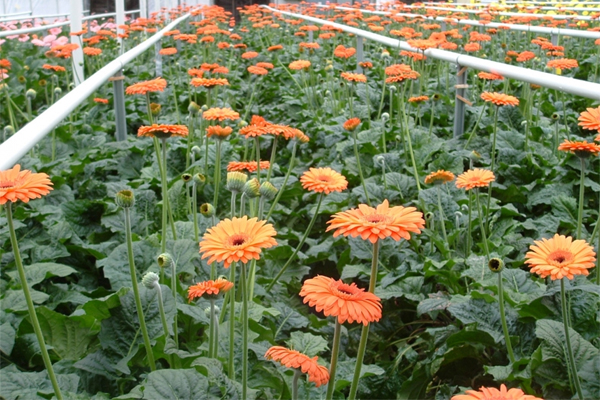
Floriculture or flower farming as it is popularly called is a discipline
of Horticulture, and is the study of growing and marketing flowers and
foliage plants. Floriculture includes cultivation of flowering and ornamental
plants for sales or for use as raw materials in cosmetic and perfume industry
and the pharmaceutical sector. The persons associated with this field
are called floriculturists.
Officially Floriculture began in the late 1800's in England where flowers
were grown in large estates, and now has spread to most other countries
as well. The floral industry today has grown to much larger proportions
and offers a wide scope for growth and profits. The countries involved
in the import of flowers are Netherlands, Germany, France, Italy and Japan
while those involved in export are Columbia, Israel, Spain and Kenya.
In India, Floriculture industry comprises flower trade, production of
nursery plants and potted plants, seed and bulb production, micro propagation
and extraction of essential oils. Though the annual domestic demand for
the flowers is growing at a rate of over 25% and international demand
at around Rs 90,000 crore India's share in international market of flowers
is negligible. India has a blooming future as far as floriculture is concerned.
Enormous genetic diversity, varied agro climatic conditions, versatile
human resources etc offer India a unique scope for judicious employment
of existing resources and exploration of avenues yet untouched.
Karnataka is the leader in floriculture, accounting for 75% of India's
total flower production. The state has the highest area under modern cut
flowers, and 40 flower growing and exporting units. The expert committee
set up by Govt. of India for promotion of export oriented floriculture
units has identified Bangalore, Pune, New Delhi and Hyderabad as the major
areas suitable for such activity especially for cut flowers. APEDA (Agricultural
and Processed Food Products Export Development Authority) is the registering
authority for such units.
The employment opportunities in this field are as varied as the nature
of work itself. One can join the field of floriculture as farm/estate
managers, plantation experts and supervisors, project coordinators etc.
Research and teaching are some other avenues of employment in the field.
Marketing of Floriculture products for different ventures is emerging
as a potential segment of this field. Besides one can work as consultant,
landscape architect etc with proper training. One can also work as entrepreneur
and offer employment to others. In addition to these careers which involve
research and actual growing of crops, floriculture also provides service
career opportunities which include such jobs as floral designers, groundskeepers,
landscape designers, architects and horticultural therapists. Such jobs
require practitioners to deal directly with clients.
Professional qualification combined with an inclination towards gardening
and such other activities produces efficient floriculturists and landscaping
professionals. The skills and knowledge required are imparted under the
professional courses of floriculture and landscaping.