
Tuesday, October 14, 2025
Film Making : Job Prospects & Career Options
Job Prospects Candidates can find employment with Film Studios, Production Companies, Advertising Agencies, Government Department, which make films or start their own venture as producer, director, editors, cameramen, soundmen, lighting crews, assistants and so on. Career Options Careers in films can be those related to the actual production of the film and those related to the film field such as a Film critic, Film archivist, Film curator, Film distributor etc. Production: Production involves too many responsibilities, sheer hardwork and anxiety after the release whether the hard work put in was worth it. Usually the production team is the first to arrive on the sets and the last to leave. Producer: He is the over-all in charge of a film. Producer is
responsible right from raising finance up to marketing the film. He is
the decision making authority in all matters, plans and manages the technical
and artistic resources. It is he who decides the story, obtain legal permission,
hires the director, actors, decides the crew and the location etc. Production
Manager and Production Assistants help the Producer in his job. The producer's
role is sometimes combined with that of directing. Production Manager: The production manager shoulders the delegated responsibility for the overall organisation of the film. He is responsible for the technical pre-planning of productions and for coordinating the crew, cast and scenery within a prescribed budget. Production Assistant: He acts as the coordinator while the producer or director is doing his artistic thing. It is the production assistant who actually make everything happen as planned. He handles all the administrative work, such as booking hotels and flights for the crew, arranging shooting schedules etc. and he is also responsible for keeping records of film sequences, scripts, call sheets and daily reports. Director: He is responsible for the management of all the creative aspects that go into the making of a film. These are the people who make the unreal real--who turn the pages of a script into reality on the screen. The director is in complete charge of the studio or location floor and controls the film artistically. He decides the camera angle and directs the work of the cast and crew, costumes, choreography and music, conduct rehearsals etc. Assistant director: They ensure all the timely arrangement of things that are required for the shoot. There can be one or more assistant directors, depending upon the film budget. Editor: The work of an film editor requires great skill, it is he who puts the film in correct sequential order. He views processed film and video with production personnel to analyse, evaluate and select scenes and to determine which scenes need to be improved or re-shot. He synchronizes the sound track and adds special effects wherever necessary. Degree in film direction and editing or professional experience is required. Screenplay writer: Screen play writer rewrites the original story, on which the film is based, in a format suitable for the screen. A graduate or postgraduate degree in literature with proficiency in creative writing can become a screen play writer. Actor: An actor should have an ability to emote well and become the character he represents in the film. They are the ones who come in direct contact with the masses and the most appreciated. Actors need a great deal of patience and commitment because most productions require long rehearsal schedules and retakes. Acting is a highly competitive profession and lot of talent, mettle as well as luck is needed to make it to the top and create a place for themselves in the field. A screen presence and a good physical appearance are additional attributes to be successful in the field. Even though formal training is not a necessity, a graduate/post graduate degree in acting will help to sharpen skills and give exposure. Animator: Animation films are created by filming sequences of
drawings or computer graphics and processing them at high speed so that
they appear to be moving. Animation graphics are used in action films
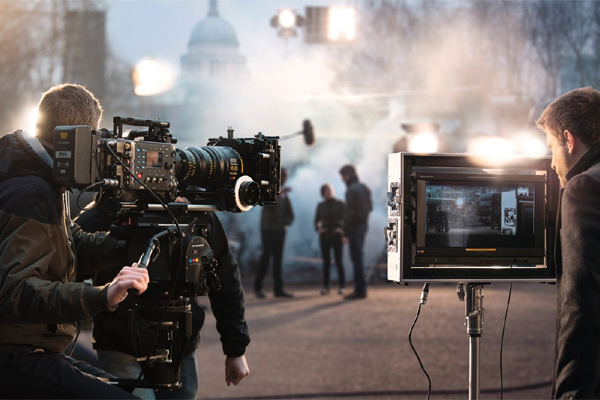
to stimulate real events. Cinematographer: He is responsible for composing each scene to
be shot, decides lighting and camera angles as per directors requirement.
He leads the camera/lighting team and is involved in the planning and
execution of a shoot from the pre-production stage. Job requires high
technical knowledge and experience in the field. In big units lighting
technician may work out the lighting plan for each shot. Soundmen: Responsible for all sounds or effects that accompany visual images (Sound Mixing). The work includes recording, dubbing and mixing of music, dialogues and other sound effects. The Sound Mixer or Sound Engineer puts together the various elements of the sound track and edits it to give it a final shape. The Sound Recordist works under the Sound Mixer and ensures proper recording. Degree or diploma in Audiography or Electronics is required. For admission to these courses a Science background at plus two level is preferred. Film critic: A critic needs to be well read, have adequate knowledge and experience in his respective field. Only persons having good knowledge about the particular subject/art can authoritatively write about the subject. He has to interview filmmakers and actors, covers local developments in the film business, and attend film festivals from time to time. Reading significant histories and biographies, understanding critical theory of film, and becoming familiar with the history of film arts are keys to success as a critic. Film Archivist: Archivists are involved with the collection, arrangement and provision and preservation of archives. Archives include official documents, photographs, maps, audio-visual material and any other information-bearing media that contains valuable historical information of individuals, companies, government departments and other organisations. An archivist can be a Film Archivist, Reference Archivist, Photographic Archivist, Appraisal Archivist, Manuscript Librarian etc. A graduate or postgraduate degree in one of more of the areas like history, art history, anthropology, archaeology, Latin, English literature, public administration, politics, law or economics or a postgraduate degree in Library and Information Studies; Museum, Gallery and Archives Management and Information Management is essential to get into this field. Archivists need to have good communication skills, analytical and research skills, an eye for detail, problem-solving skills and organisational ability, Knowledge of different databases and , Archivists need to be patient, accurate, thorough and able to make good judgements about what information to keep. They should work in a well organised and methodical manner, be able to keep information private and work well under pressure. |
Find it Useful ? Help Others by Sharing Online
Comments and Discussions |
|
||||||||||||||||||||||||||||||||||||||||||||||||||||||||||||||||||||
|
||||||||||||||||||||||||||||||||||||||||||||||||||||||||||||||||||||
|
||||||||||||||||||||||||||||||||||||||||||||||||||||||||||||||||||||
|
||||||||||||||||||||||||||||||||||||||||||||||||||||||||||||||||||||
|
||||||||||||||||||||||||||||||||||||||||||||||||||||||||||||||||||||
|
|