Forensic science is primarily concerned with the application of scientific
principles for the investigation of crime. Using the very latest in technology,
forensic scientists convert the clues collected from a crime scene into
evidence admissible in a court of law. It is the use or application of
science in courts or legal proceedings. This is a challenging and
interesting field for those who have are inquisitive and loves adventure.
Forensic Science is essentially a crime laboratory-based profession,
the course qualifies students to apply their knowledge of science to the
investigation of crime. But the expertise of a forensic professional
is also used in civil cases for issues like proving the validity of a
signature on a will, to a claim of the products liability, to find out
whether an industry is complying with environmental rules.
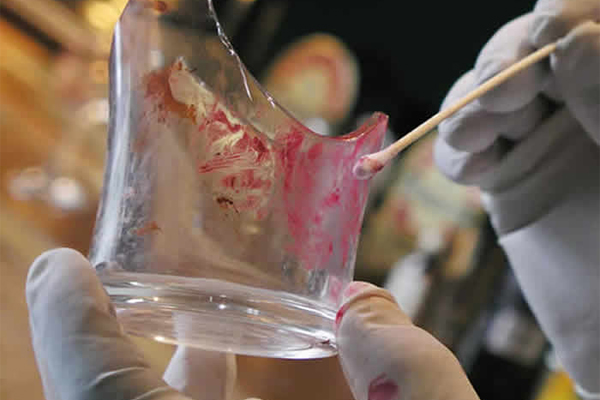
Forensic scientists analyze all physical evidence found on a victim on
the scene of a crime and compare it to evidence found on a suspect and
provide expert testimony in a court of law. The evidences might include
traces of blood, saliva, other body fluids, hair, fingerprints, footwear
and tyre impressions, explosives, specimens of tissue for poisons, blood
and urine for alcohol etc. Their expertise lies in the determination of
facts using these evidences. They have to prepare a report of their investigation
and appear in the court to give evidence. They work closely with
the police to provide scientific evidence that is admissible in the court.
Forensic science is not a discipline or branch of science, but is a catch-all
for many distinct disciplines. It is broadly grouped into three:
Medical, laboratory and field science.
Forensic medicine is a broad medical subject which includes forensic
pathology, psychiatry, psychology, forensic medicine and odontology (dentistry).
Laboratory sciences include chemistry, biology, toxicology, ballistics,
fingerprints, questioned documents and marks and impressions. Field sciences
include crime scene investigation which incorporates areas such as fire
and explosion scenes and clandestine drug laboratories.
Video on Forensic Science
Forensic Speech Science is a latest addition to Forensic science. Forensic
speech science deals with recording, analysing voice samples using spectrogram, a machine used to identify the speaker. Voice recordings
are used as evidence in the court of law in anti corruption and other
criminal offences. In India, there are no exclusive labs for voice analysis,
but in European countries this analysis is widely used for detecting criminal
cases. Telephone calls and text messages are considered as evidences for
voice analysis. All India Institute of Speech and Hearing (AIISH), Mysore
conducts course on Forensic Speech Sciences.